The Best Water Workouts for Back Pain
Water workouts reduce spinal load, improve circulation and decrease inflammation, making them ideal for back pain relief.
Low intensity exercises include water walking, leg lifts, pool planks and the superman stretch.
Higher intensity options such as water cycling and resistance training build strength and cardiovascular fitness without aggravating the back.
Water supports up to 90% of your body weight, dramatically reducing pressure on the spine and joints.
Both chronic and temporary back pain sufferers can benefit from a structured aquatic exercise program.
Back pain affects people in different ways, but the impact is consistent: reduced mobility, discomfort and a lower quality of life. One of the most effective and widely recommended approaches for alleviating back pain is aquatic exercise. A pool workout can reduce pain, increase blood circulation, decrease inflammation, restore mobility and improve day-to-day function.
If you are not sure where to start, here are the best water workouts for back pain, from gentle introductory exercises to higher intensity sessions.
Low Intensity Exercises
Walking and Lunges
Walking and lunges are an excellent starting point for beginners or as a warm-up at the beginning of a session. Walk from one side of the pool to the other, keeping your feet in contact with the floor throughout. When you feel comfortable, progress to lunging as you step. You can gradually increase speed and intensity as you grow stronger. The buoyancy of the water keeps your back supported throughout the movement.
Leg Lifts
Leg lifts are a popular choice for both new and experienced pool users. Begin with your back against the pool wall to support good posture, then slowly lift each leg toward your chest as though you are marching in place. You can increase the challenge by lifting your arms into the air as you march, or by stepping away from the wall to engage your core more fully.
Pool Planks
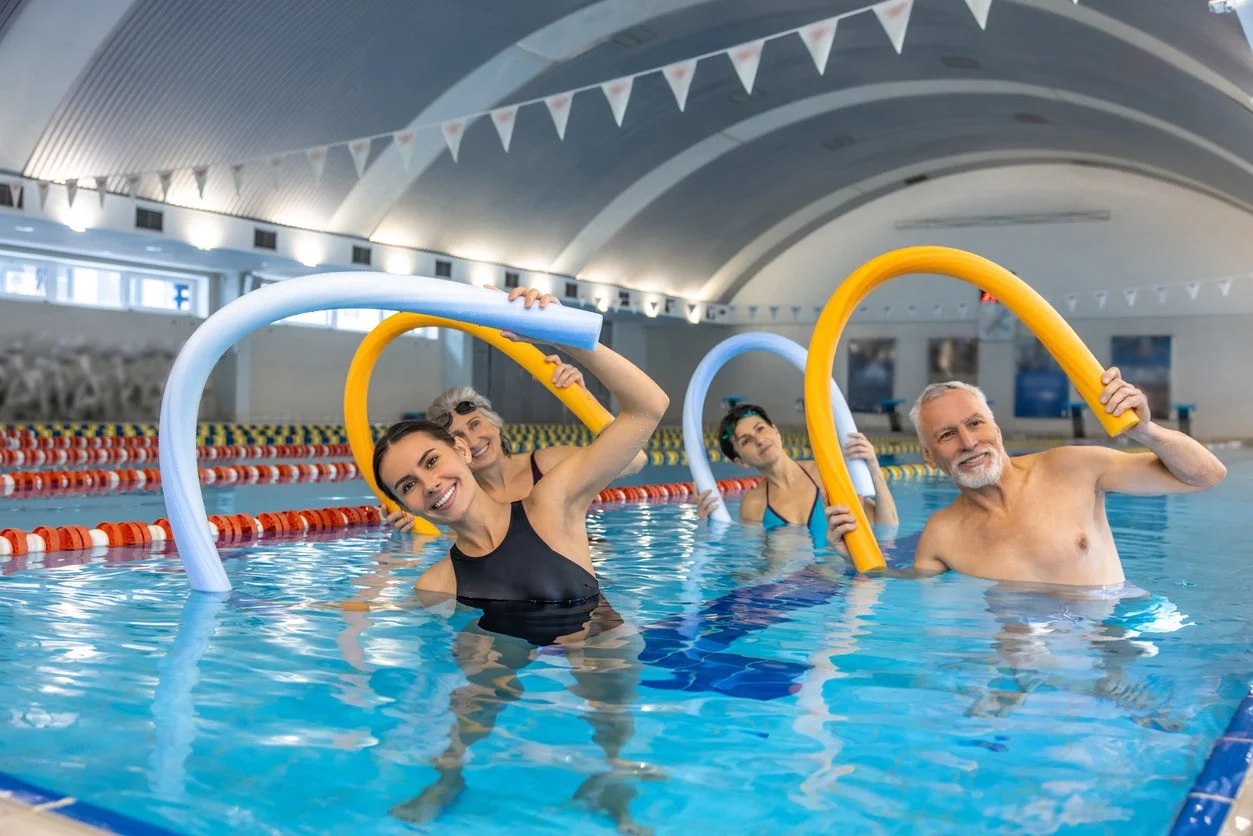
Core strength is essential for good posture and for managing back pain both in and out of the water. To perform a pool plank, hold a pool noodle in front of you and push it down toward the floor, leaning your body forward until you are at roughly a 45-degree angle to the surface. You should feel your core engage immediately. Hold for as long as possible and try to extend the duration with each session.
Superman Stretch
Prolonged sitting and standing compresses the spine under your body weight, worsening back pain over time. The superman stretch counteracts this by extending the backbone and surrounding muscles while the water supports your weight. Place both hands on the side of the pool and spread your legs behind you so that you are floating face down, fully extended. Repeat as needed throughout your session.
Higher Intensity Exercises
Water Cycling
Water cycling is a highly effective way to raise your heart rate without placing additional pressure on your back. The underwater bike delivers the same cardiovascular and muscular benefits as land-based cycling, with significantly less load on your spine. You can tailor the intensity to match your ability and pain level, and choose between solo sessions or group classes for a more social experience. Learn more about aqua cycling classes at Aquatic Performance Training.
Strength Training
Strength training in water is an effective way to build muscle, improve tone and correct posture without placing your body under excessive strain. If you are new to weight and strength training, joining a class is recommended so that a qualified instructor can ensure you are using correct form. Proper technique maximises the benefit of each exercise and reduces the risk of further injury to your back. The aqua group training sessions are a great option for guided strength work.
Resistance Training
Aquatic resistance training delivers a well-rounded workout that combines cardiovascular endurance with strength building. Circuit-based sessions allow you to control intensity based on your pain level on any given day, and you can choose to focus on specific body parts or work the whole body. For those who want professional oversight, water-based resistance training classes are available with experienced instructors.
Aquatic Exercise for Back Pain: Key Benefits at a Glance
| Benefit | How Water Exercise Helps |
|---|---|
| Reduced spinal load | Water supports up to 90% of body weight, relieving pressure on the spine and joints |
| Improved circulation | Submersion dilates blood vessels, increasing oxygen and nutrient delivery to muscles |
| Lower inflammation | Increased blood flow activates protective proteins that reduce cell stress and swelling |
| Greater flexibility | Reduced gravitational stress allows a wider range of movement |
| Strength building | Water resistance challenges muscles without the need for heavy equipment |
| Mental wellbeing | Aquatic exercise reduces physical and mental stress, supporting overall health |
Benefits of Aquatic Exercise for Back Pain
For anyone dealing with back pain, whether temporary or chronic, aquatic sports rehabilitation provides a low-impact environment to build muscle and restore mobility. Here is why so many people choose pool-based exercise to manage and alleviate back pain.
Buoyancy: On land, your body must exercise while supporting its full weight, which places significant load on your spine. In water, buoyancy supports up to 90% of your body weight, reducing pressure on your joints and spine and making movement considerably easier and less painful.
Circulation: Water workouts are highly effective for improving blood circulation. When submerged, your blood vessels dilate and blood flow increases throughout the body. This delivers more oxygen and nutrients to tissues, activates protective proteins and reduces inflammation, swelling and cell stress.
Variety: Pool-based exercise goes far beyond swimming. You can build strength with water weights, develop cardiovascular endurance with water cycling, or improve mobility with conditioning and flexibility work. This variety keeps your program engaging and ensures a balanced approach to back pain management.
For an evidence-based overview of aquatic exercise and chronic pain management, the Arthritis Foundation guide to aquatic exercise offers a useful reference point.
Speak to an Expert at Aquatic Performance Training
If you are ready to explore water workouts for back pain, the team at Aquatic Performance Training is here to help. With a range of individual and group classes, a varied and accessible schedule, and experienced instructors, you are sure to find a program that works for you. Our trainers have the knowledge to build tailored workout plans that ease back pain and restore your strength and mobility.
Visit one of our centers or book a visit online to get started. We look forward to hearing from you soon.
Frequently Asked Questions
Is swimming good for back pain?
Yes. Swimming is a low-impact, full-body exercise that reduces spinal load and improves circulation, both of which help to alleviate back pain. However, certain strokes can put strain on the lower back, so it is worth getting guidance on technique from a qualified instructor if you are a beginner.
What water exercises are best for lower back pain specifically?
Pool planks, the superman stretch, water walking and leg lifts are particularly effective for lower back pain. They strengthen the core and surrounding muscles, which support the spine, while the water keeps impact minimal. Water cycling is also highly recommended as it conditions the back without adding compressive load.
How often should I do water exercise for back pain?
For most people, two to three sessions per week is a good starting point. Consistency is more important than duration, especially in the early stages. As strength and mobility improve, you can increase the frequency or intensity of sessions.
Can aquatic exercise make back pain worse?
When performed correctly and at an appropriate intensity, aquatic exercise is generally safe for back pain sufferers. However, poor technique or excessive intensity can aggravate symptoms. It is always advisable to consult with a healthcare professional before starting, and to work with a qualified instructor to ensure your form and programming are appropriate for your condition.