Underwater Treadmills vs Land Running: Why Submerged Cardio Accelerates Recovery and Fat Loss
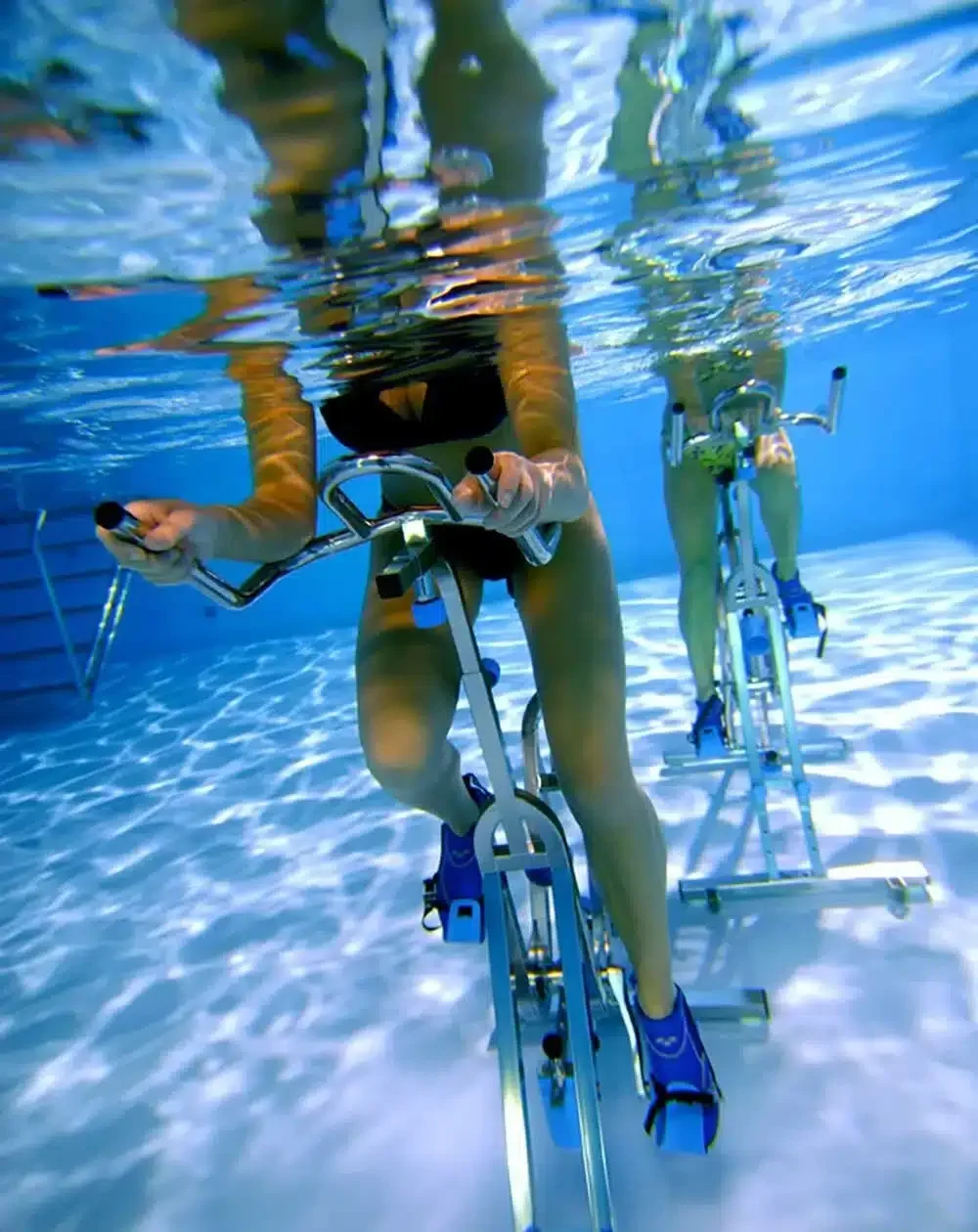
Chest-deep immersion can offload up to 90% of your body weight, so you keep running while removing most of the joint impact.
Your heart rate, breathing and calorie burn stay in a true cardio zone, because water resistance replaces the workload gravity normally provides.
Hydrostatic pressure acts like full-body compression, helping control swelling and supporting circulation during and after your session.
We see the biggest results in runners with shin splints or stress fractures, post-ACL and post-meniscus patients, seniors protecting their joints, and athletes on active recovery days.
Underwater treadmill work is a bridge, not a permanent replacement. It keeps your fitness intact until land loading is safe again.
Running is one of the most efficient forms of cardiovascular exercise available. It is also one of the most punishing. Every stride on pavement sends a ground reaction force of roughly two to three times your body weight through your ankles, knees, hips and lower back. Multiply that by several thousand steps and you have the reason so many of the runners who walk through our doors have been sidelined by shin splints, stress fractures or worn cartilage.
An underwater treadmill workout changes the equation. You keep the running mechanics. We remove most of the impact.
The Science of Buoyancy: Cardio Without the Collision
Buoyancy is the upward force water exerts on an immersed body, reducing the effective weight your joints must support. The deeper you go, the more of your body weight the water carries for you.
Waist-deep water offloads roughly 50% of body weight
Chest-deep water offloads roughly 70% to 75%
Neck-deep water offloads up to about 90%
This is the mechanism that makes low impact running possible for people who cannot tolerate pavement. A 200 lb runner walking chest-deep in our pool is loading their knees like a 55 lb person, yet the muscles are still firing through a full gait cycle.
Here is the part that surprises most of our new clients: the cardiovascular demand does not disappear. Water is roughly 800 times denser than air, so every forward step drives your legs through significant drag. That resistance replaces the gravitational load, which is why your heart rate, respiratory rate and energy expenditure stay in a genuine training zone. You are working hard. Your joints simply are not paying for it.
Water depth also becomes a dial our trainers can turn. As your tissue tolerance improves, we progress you into shallower water, reintroducing load in controlled increments rather than the all-or-nothing jump back to the road that so often causes reinjury.
Underwater Treadmill vs. Land Running at a Glance
| Factor | Underwater Treadmill | Land Running |
|---|---|---|
| Joint impact | Reduced by up to 90% depending on depth | Two to three times body weight per stride |
| Resistance source | Water drag, adjustable by speed and depth | Gravity, body weight and terrain |
| Cardiovascular demand | High and sustained | High and sustained |
| Swelling and edema control | Hydrostatic pressure assists circulation | No compression effect |
| Suitability during rehab | Often possible in early to mid stages | Usually restricted until later stages |
| Fall risk | Low, water supports and slows the body | Higher, especially with balance deficits |
| Body temperature | Regulated by water, less overheating | Rises with effort and ambient heat |
Hydrostatic Pressure and Lactic Acid: Why You Feel Better the Next Day
Hydrostatic pressure is the constant, even force water applies to every submerged surface of the body, increasing with depth. Think of it as a compression garment you cannot take off.
That pressure delivers three practical benefits during a session on our aqua treadmills:
Circulatory support. Pressure on the limbs encourages venous return, helping move blood and fluid back toward the heart rather than pooling in your lower legs.
Swelling management. For a post-operative knee or a chronically inflamed ankle, that same inward pressure helps limit fluid accumulation during activity, which is a common problem with land-based exercise.
Reduced muscle trauma. Because there is no repetitive impact and no eccentric pounding on landing, the microscopic muscle damage that drives delayed onset muscle soreness is substantially lower.
A quick word on lactic acid, because it is widely misunderstood. Lactate is not the cause of next-day soreness. It clears from the bloodstream within an hour or two of finishing exercise. What water genuinely helps with is the mechanical damage and inflammatory swelling that do cause soreness, along with the improved circulation that supports clearance of metabolic byproducts while you train. The outcome our clients report is consistent: they finish a hard session and can train again sooner. Broader research into training, performance and rehabilitation in water-based sports continues to explore why immersion is so effective for recovery.
Who Benefits Most from Submerged Cardio?
Post-ACL and Post-Meniscus Rehabilitation
After knee surgery, the goal is to restore your gait pattern, quadriceps activation and range of motion without overloading healing tissue. Walking against water drag lets you practice heel strike, midstance and toe-off with a fraction of the compressive load. Our ACL treatment programs use water depth as a progression tool as your strength returns.
Runners with Shin Splints or Stress Fractures
Bone stress injuries require load reduction, not activity elimination. Aquatic treadmill work preserves your aerobic base and running-specific neuromuscular patterning during the weeks when road mileage is off the table, which is why it features so heavily in our sports rehabilitation programming.
Seniors Protecting Joint Health
For older adults with osteoarthritis or reduced balance confidence, water removes the fear factor. You cannot fall hard in our pool. That psychological safety often unlocks a higher training intensity than the same person would ever attempt on land.
Athletes on Active Recovery Days
Between hard sessions, you need blood flow without additional tissue damage. A moderate submerged session delivers exactly that, and pairs well with targeted water personal training for strength work in the same visit.
Weight Loss Clients
People carrying significant extra weight are the group most likely to be injured by running and most in need of sustained cardio. Buoyancy removes that barrier. Longer sessions become tolerable, adherence improves, and adherence is what actually drives fat loss over months.
If you are not sure which entry point fits your situation, our team can assess you and recommend a starting depth and intensity. Book a visit and we will talk through your goals and any medical restrictions before you get in the water.
Frequently Asked Questions
Is an underwater treadmill workout as effective as running on land?
For cardiovascular fitness and calorie burn, yes. Water drag maintains a comparable heart rate and metabolic demand. For bone density and impact tolerance, land running still has an advantage, which is why we use aquatic work alongside or as a bridge back to land training rather than as a permanent substitute for healthy runners.
How soon after knee surgery can I use an aqua treadmill?
Timing depends on your surgeon's protocol and, critically, on complete wound closure. Many of our clients begin aquatic work within two to six weeks post-operatively, but you must have clearance from your surgeon first. Never enter a pool with an open or weeping incision.
Do I need to know how to swim?
No. Underwater treadmill training is performed standing in chest-deep water with your head above the surface at all times. Swimming ability is not required.
How many calories does an underwater treadmill session burn?
It varies with your body weight, water depth, speed and session length, but a moderate to vigorous 45 minute session typically falls in a similar range to an equivalent land-based cardio session. Your trainer can adjust resistance to target a specific intensity zone.